
In this case, the actual rate per hour is $7.50, the standard rate per hour is $8.00, and the actual hour worked is 0.10 hours per box. This is a favorable outcome because the actual rate of pay was less than the standard rate of pay. In this case, the actual hours worked are 0.05 per box, the standard hours are 0.10 per box, and the standard rate per hour is $8.00. This is a favorable outcome because the actual hours worked were less than the standard hours expected. According to the total direct labor variance, direct labor costs were $1,200 lower than expected, a favorable variance.
Get in Touch With a Financial Advisor
- If, on the other hand, less experienced workers are assigned the complex tasks that require higher level of expertise, a favorable labor rate variance may occur.
- The first option is not in line with just in time (JIT) principle which focuses on minimizing all types of inventories.
- If anything, they try to produce a favorable variance by seeing more patients in a quicker time frame to maximize their compensation potential.
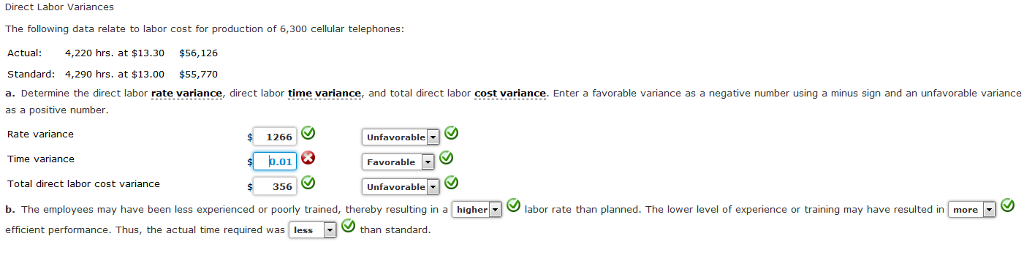
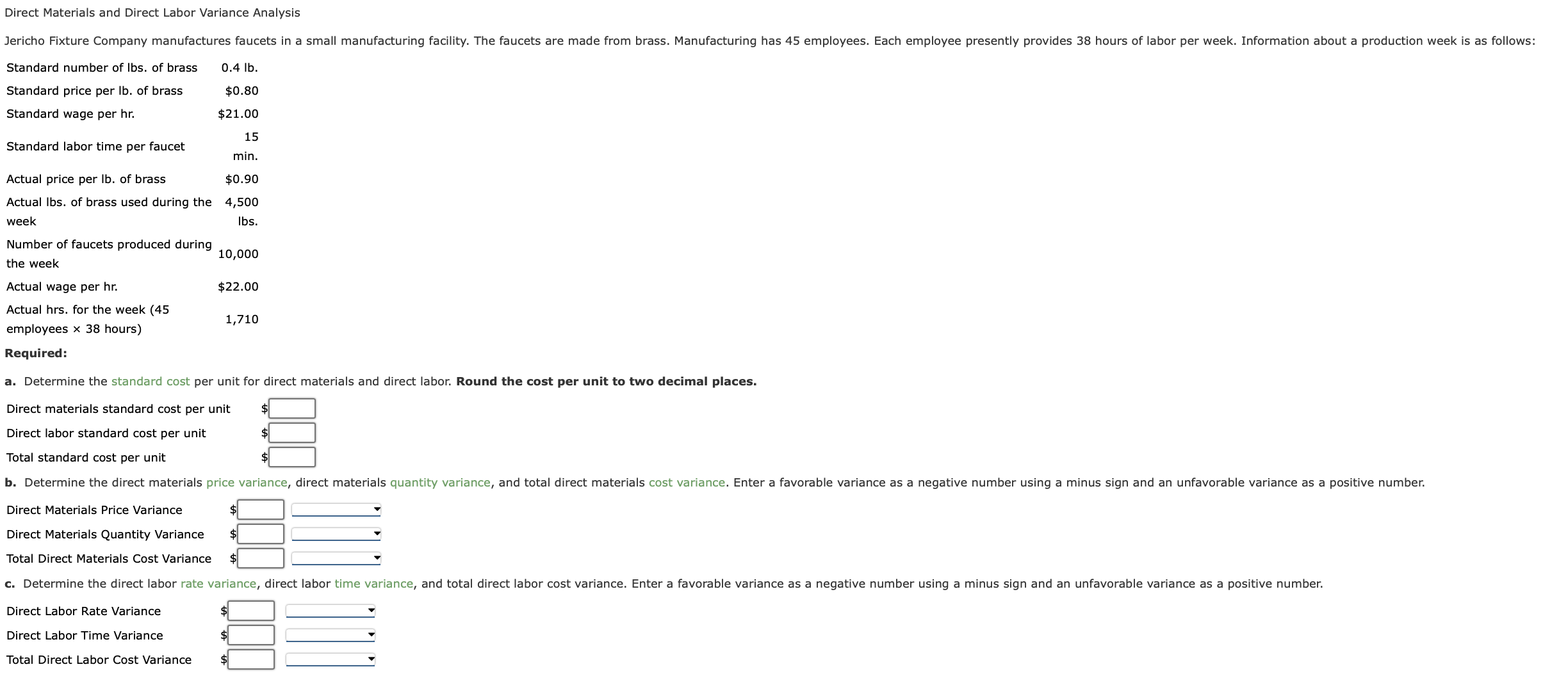
- Direct labor variance is calculated by comparing the actual hours worked and the actual hourly wage rate against the standard hours allowed for the actual production level and the standard wage rate.
Usually, direct labor rate variance does not occur due to change in labor rates because they are normally pretty easy to predict. A common reason of unfavorable labor rate variance is an inappropriate/inefficient use of direct labor workers by production supervisors. The other two variances that are generally computed for direct labor cost are the direct labor efficiency variance and direct labor yield variance.
Do you already work with a financial advisor?
To calculate Direct Labor Mix Variance you must first identify the exact amount of labor it requires to produce a product. Specifically, knowing the amount and direction of the difference for each can help them take targeted measures forimprovement. Later in Part 6 we will discuss what to do with the balances in the direct labor variance accounts under the heading What To Do With Variance Amounts. Direct labor rate variance is very similar in concept to direct material price variance.
Direct Labor Variances FAQs
Direct labor rate variance arise from the difference in actual pay rate of laborers versus what is budgeted. Before getting started, we wanted to offer an easy way to understand the concept of direct labor efficiency variance with this useful online calculator. Companies can reduce Direct Labor Mix Variance by more accurately predicting labor needs, using flexible staffing solutions, and making use of labor-saving technology.
Sign up for the Dummies Beta Program to try Dummies’ newest way to learn.
The most common causes of labor variances are changes in employee skills, supervision, production methods capabilities and tools. An example is when a highly paid worker performs a low-level task, which influences labor efficiency variance. Reporting the absolute value of the number (without regard to the negative sign) and an Unfavorable label makes this easier for caring for children while you care for aging parents management to read. We can also see that this is an unfavorable variance just based on the fact that we paid $20 per hour instead of the $18 that we used when building our budget. Direct Labor Mix Variance is the difference between the budgeted labor mix and the actual labor mix used in production, which can lead to an over- or under-utilization of resources.
Explanation of Direct Labor Variance
Project deadlines are becoming tighter, and the rising cost of skilled labor, understanding and improving labor efficiency isn’t just a recommendation. The Human Resources and Accounting departments will set a standard cost for labor, and the budget will be built on that. A direct labor cost variance occurs when a company pays a higher or lower price than the standard price set. Effective labor variance management is not a one-time task but an ongoing process. Companies should continuously monitor labor variances to ensure that labor costs remain aligned with budgeted expectations.
The standard rate per hour is the expected rate of pay for workers to create one unit of product. The actual hours worked are the actual number of hours worked to create one unit of product. If there is no difference between the standard rate and the actual rate, the outcome will be zero, and no variance exists. Actual and standard quantities and rates for direct labor for the production of 1,000 units are given in the following table. Total actual and standard direct labor costs are calculated by multiplying number of hours by rate, and the results are shown in the last row of the first two columns. The combination of the two variances can produce one overall total direct labor cost variance.
Higher-skilled workers may command higher pay rates than those budgeted for standard labor. Additionally, substituting higher-paid skilled labor for lower-paid workers can result in labor rate variances. Direct labor variance is a financial metric used to assess the efficiency and cost-effectiveness of a company’s labor usage.